From the Middle Ages to the mid-20th century, no truly new ideas enriched musical aesthetics. The fundamental concepts were refined and positions clarified, but thinking continued to revolve around the contrast between skeptical formalism and the pursuit of content and expressiveness in music.
In the 1950s, however, a shift began to emerge that was comparable to the “Copernican revolution” proclaimed by Kant for epistemology during the Enlightenment. This revolution in musical thinking is inextricably linked to a concept that in turn characterizes one of the greatest intellectual upheavals in human history: the idea of information.
The impetus for the new wave came from the book Information Theory and Aesthetic Perception by French social psychologist Abraham Moles in 1958. In his treatise, the author succeeds in making two changes of direction in musical aesthetics: for the first time, it is not the score or pre-formulated rules of composition that form the basis of systematic theory, but the actual sound events with all their complexities. Secondly, Moles manages to develop a fruitful theory of the precise measurement of aesthetic content on this seemingly shaky basis.
For Moles, the question regarding aesthetic content is no longer: What do I recognize? but rather: How do I recognize? Viewed in this way, music says nothing about the outside world and has no conventional meaning. And music aesthetics becomes an analysis of the way we perceive the world in a comprehensive sense. This also means how we emotionally color the outside world and how we express our own emotions in concrete forms.
Moles brings about this change by distinguishing between semantic and aesthetic information. Semantic information serves to “prepare actions” (this definition clearly reflects the jargon of information theorists working in communication sciences).
[Aesthetic information] cannot be translated, does not refer to a universal repertoire, but to a repertoire of knowledge shared by sender and receiver; it cannot theoretically be translated into another ‘language’ or into another system of logical signs, because this other language does not exist. It comes close to the concept of personal information.
At first glance, Moles’ theory, with all its detached technical terminology, seems daunting and unmusical. In addition, many of his ideas seem very complex and, despite the technical language, somewhat obscure. This has prevented many practical musicians from engaging with it (Moles was pelted with tomatoes by left-wing radicals during his inaugural lecture in Strasbourg). The theory found its main following in structuralist and avant-garde circles, which in some cases obscured it even further and turned it into a kind of elitist secret science. Reading Moles’ book is indeed not easy for the average reader, nor are the writings of his German counterpart Max Bense.
Information theory is a child of the modern communications society. The telephone, telegraph, and computer networks have confronted technicians with fundamental questions about how information is transmitted and what laws play a role in this process. Questions have been raised such as: What is the capacity of a transmission medium, and how can it be measured? What role do disturbances play in transmission?
In order to address such problems adequately, a general theory of what information actually is must first be formulated. In pursuing this path, theorists struck gold in several places: during Moles’s lifetime, it became increasingly apparent that the concept was also of great importance for more fundamental questions, for example in physics, where thermodynamic problems appeared in a whole new light – and also in aesthetics.
The starting point for information theory was marked by two articles published in 1948 and 1949 by scientists working at the famous research laboratories of the all-powerful American Bell Telephone Company. They were written by Claude Shannon and Warren Weaver. In their draft of a general mathematical formulation of the concept of information, the two authors distinguished three levels of communication:
- the technical level (how can signs be transmitted?)
- the semantic level (how accurately do the signs correspond to the desired meaning?)
- the question of effectiveness (how does the received message influence behavior in the desired way)?
The wording used for the third level reveals the theory’s origins in technology. Information can also be exchanged between machines or between sensors and machines. A heat sensor, for example, measures the room temperature and transmits its data to a radiator, which responds to this data by becoming hotter or cooler. In human communication, the question would be more accurately phrased as: “How correctly can the recipient understand the message?”
It is extremely important to see that information and meaning are two different things and that information theory does not focus on the meaning of a message. Since communication scientists are primarily concerned with technical and economic problems, they ask themselves questions such as: How much information can I transmit via which medium? How can I design the information so that I need as little transmission effort as possible? How much interference can a transmission channel tolerate? And so on. Information is primarily viewed in quantitative terms.
It is precisely this quantitative aspect that is new to aesthetics. Until then, the discipline had dealt exclusively with qualitative questions. Quantitative aspects played only a marginal role. For example, when the king in the film “Amadeus” complains to Mozart about the excessive number of notes in the music.
Shannon and Weaver characterize a communication system as follows:
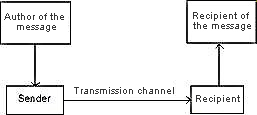
The communication model
of Shannon and Weaver
A sender translates a message into a transportable signal, which is then sent via a channel. At the other end of the channel, the receiver translates the signal back into the original message. Applied to music, this roughly means the following: A composer wants to convey a mood or an abstract message. To do this, they package it in the medium of music, which the listener perceives and distills the message from.
In order to address all the questions raised, there must be a way to quantify information. This is done using the following method:
The smallest possible amount of information is provided by a simple yes/no scheme. Here, one message is selected from exactly two possible messages. It is not possible to convey any less information, because the transmission of a single possible message conveys nothing at all; we know in advance that every possible question will be answered with “yes” and learn nothing new.
In this sense, a piece of information can be seen as a selection from a set of several messages. The more choices there are, the more detailed the information is and the higher its information content.
The “yes/no” scheme is very reminiscent of the 1/0 logic of computer coding. And in fact, the unit of information is called a bit.
If one bit means a choice between two possible messages, then two bits should mean a choice between four possible messages. This is indeed the case:
| 00 | (equivalent to 0) |
| 01 | (equivalent to 1) |
| 10 | (equals 2) |
| 11 | (equals 3) |
The eight possibilities of eight bits of information can be listed as follows:
This means that the binary system, which has become common knowledge thanks to computer science, is ideal for quantifying amounts of information. They are understood as the number of possibilities for creating different patterns with a given set of elements.
However, we intuitively say that two bits (twice 0/1) contain twice as much information as one bit, and three bits (three times 0/1) contain three times as much (computer experts can confirm this: they see 256 MB of main memory as twice as much as 128 MB of main memory!
Our scale follows the following rule:
2 is the same as 21
4 is the same as 22
8 is the same as 23.
In other words, we count the amount of information based on the exponents.
But we have already encountered something like this before: we perceive information in a similar way to frequencies when we hear, namely logarithmically.
This system can be differentiated even further: Unlike the binary system, written language does not only have two characters (“1” and “0”). A word such as “TIGER” is a string of five characters, each of which is selected from a pool of around two dozen characters (A, B, C, … and so on). The information content of each individual character is therefore already higher than that of a “1” or a “0” in the binary system. This can also be seen when the word “TIGER” is translated into binary notation using the ASCII character set:
| TIGER | (5 characters) |
| 01111011 01001001 01000111 01000101 01010010 | (40 Zeichen) |
The ASCII character set numbers the characters of the written language. T is assigned the number 123, I is 73, G is 71, E is 69 and R is 82. If you represent these numbers in binary form, you get the above binary notation of the word “TIGER.” The result: the smaller the character set, the longer the message.
So you have an exact measure if you can specify the number of characters in the code exactly. It is important to remember this, because this requirement becomes one of the most important aspects of aesthetic information theory.
Before Abraham Moles has his say, three more terms need to be introduced that will really bring his idea to life: redundancy and entropy.
Redundancy measures how much information in a message is “superfluous.” This is of great importance to communication engineers because they want to transmit as much as possible with as little effort as possible. The limited capacity of channels means that methods are sought to eliminate everything superfluous as far as possible. (Incidentally, the music industry is currently grappling with an issue that has a lot to do with eliminating redundancy: the much-discussed MP3 compression, which allows music to be distributed over the Internet in excellent quality. Compression methods such as MP3 do exactly that in a sophisticated way: they detect redundancies in the transmission and eliminate them.)
The idea of redundancy can be intuitively understood using patterns. The following character string shows an obvious pattern:
0010010010010010010010010010010010010010010010010010010
The string “001” is repeated continuously. The redundancy in this string is very high.
Now compare the following string:
0100111001001010010100110001100110011010101110011110001
This string does not follow any obvious pattern; new characters appear constantly. The redundancy is low.
Redundancy is also related to the predictability of a pattern and thus to probability. In the first case, it becomes increasingly likely that the sequence will continue with “001”; in the second case, no pattern has a high probability. This is another important characteristic of information: the more probable a message is, the less information it contains; the more orderly a pattern is, the less information can be extracted from it.
There is a striking connection between information and theoretical physics. It goes back to one of the most fascinating figures produced by the physics community in the 19th century, Ludwig Boltzmann (1844–1906). Boltzmann was not only a gifted experimenter, he also wrote extremely witty travelogues (Reise eines deutschen Professors ins Eldorado [Journey of a German Professor to Eldorado][6]) and was a music student of Anton Bruckner. In physics, he was one of the first staunch advocates of atomic theory to investigate the connections between thermodynamics and mechanics. The problem that particularly preoccupied him was a peculiar asymmetry between the two fields.
In mechanics, processes can be reversed; for example, a car that is pushed up a ramp can be rolled down again in the same way. If a counterweight is responsible for the movement, its potential energy is also regained:
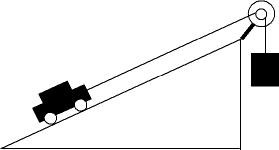
Mechanical force is reversible. The height
that the weight loses when the car moves upward
can be regained when the car moves downward.
.
Processes in thermodynamics are of a completely different nature. Once a gas has spread out in a room, it cannot be forced back into the gas cylinder.
Fundamental to Boltzmann’s theory is the concept of order. It can be observed that any system tends to transition from a state of order to a state of disorder. In other words, a physical system tends to transition from a less probable state to a more probable one in a logarithmic ratio.
The degree of order in a system is expressed using the concept of entropy. It is a measure of the order or disorder of a system. The corresponding formula
whose derivation we will spare ourselves, even adorns Boltzmann’s grave in Vienna’s Central Cemetery.
The consequence of Boltzmann’s law is that the order of the entire universe tends to dissolve more and more until a uniform state of maximum disorder is reached.
The astonishing connection between thermodynamics and information theory: information can be measured by entropy. This can be illustrated by the two strings of characters above: The first is well-ordered and therefore has low entropy, while the second is more chaotic and therefore has higher entropy. From a physical point of view, entropy and information are therefore in a paradoxical relationship: the greater the chaos in a system, the greater the amount of information that can be stored in it. The noise of a picture disturbance on a television is therefore, in principle, capable of conveying far more information than a scene from the classic film “Lawrence of Arabia,” which consists mainly of uniform sand and a uniform blue sky.
This paradox dramatically illustrates that information and meaning are not the same thing. The amount of information, as Shannon and Weaver understand it, has no meaning in itself. It merely indicates the amount of potential meaning that could be encoded.
The “open sesame” for Abraham Moles’ aesthetic theory is therefore the possibility of breaking music down into discrete building blocks that can be seen as elements of a quantifiable language. As mentioned above, a measure of information can only be defined if the combinatorics of discrete elements can be brought into play. In fact, discrete elements already exist in music: in the beats of the meter and the discrete pitches, as well as in the well-defined and distinct timbres of instruments.
However, Moles takes this idea even further. He enters the field of sound physiology and, for the first time, opens up the possibility of viewing the approaches of the great pioneers of music psychology in the 19th century – Carl Stumpf, Hermann von Helmholtz, and others – not in isolation, but as part of aesthetic considerations. Until now, he argues, all attempts to link the physical and physiological foundations of music with its aesthetic qualities have failed:
Musical acoustics, which so many aestheticians and musicians had hoped for, was largely a failure because it was not interested in the real problems of creating sound structures. For example, it investigated the friction of the bow on the string, although the only phenomenon of interest to the musician, who is not an instrument maker, was the sound produced by that string. The information theory of physics should therefore be required to attempt to explain the structures of this particular message after first reporting on some essential aspects of the elementary structures. We will now make this attempt, changing our methodological standpoint in order to prove the existence of the phenomenon of sound per se, independent of outdated traditional connections—in short, the existence of the sound object.
One of the pivotal points between musical acoustics and aesthetics is the way in which the sign system of music comes into being. Moles leaves aside the traditional Pythagorean-Helmholtz explanation via the overtone spectrum. According to information theorists, a tone consists of the components of loudness (physically measured in microbars as pressure, perceptually in decibels, dB), pitch (physically as frequency, perceptually as a level of octave division) and length (in seconds, or as duration).
One might now ask how many steps in these components humans are capable of distinguishing. For sound intensity, there is a lower threshold below which nothing can be perceived. The decibel scale is calibrated so that this point is 0 dB. However, there is also an upper saturation threshold above which sounds are perceived only as pain and cannot be differentiated. This is around 140 dB. It is now important to determine how fine the distinctions are that the ear is able to make.
Experimental tests have shown that differences in loudness of less than one decibel are no longer perceived (this threshold can vary depending on the study and context; we are only concerned with the principle here). In principle, humans are therefore able to distinguish between approximately 140 degrees of loudness. For professional orchestra musicians, there is even a much coarser scale of about eight levels (Moles does not allow mp, by the way):

This would be the first step in creating a scale for loudness. Analogous observations can be made for pitch. The lower threshold is around 16 Hz; below this, only rumbling or knocking is perceived. The upper threshold is age-dependent and is around 16,000 Hz. The ability to distinguish between frequencies close to each other is highly dependent on the frequency and is generally around 0.5%. This means that humans can physiologically distinguish around 1200 pitch degrees. Musical convention reduces this discrimination ability (according to Moles) to around 92 tones (the extended piano keyboard).
The following observations have been made regarding tone duration: Two events are perceived as separate if they are at least approximately 0.05 seconds (i.e., 50 milliseconds) apart. If a tone lasts longer than 6 to 10 seconds, it is simply perceived as very long without differentiation. The time duration distinction between these two thresholds results in approximately 30 different values physiologically. According to Moles, this grid is also greatly simplified in music, namely to:
In this respect, Moles must be corrected, because on the one hand he confuses absolute and relative lengths: the distinctions he seeks refer to absolute tone durations, but the tone lengths given are relative to a tempo. On the other hand, dotted notes, doubled notes, and also hemiolas, triplets, quintuplets, and so on are missing. The musical ability to differentiate is therefore much finer. Of course, this does not change Moles’ actual argument.
These elements are now used to construct musical “messages” whose information content can, in principle, be quantified thanks to information theory. This opens up a wide field for experimentation. How much musical information can a listener take in? What is the most pleasant density of musical information (think again of Mozart’s king) and so on.
According to Moles, there is another important aspect to consider: in the technological age, the way music is perceived has undergone a profound change. It is conveyed via technical transmission channels—loudspeakers, radio. It is no longer primarily performance instructions in the form of notes that are stored, but the actual sound events (on tape, records, and today on CDs, DVDs, or hard drives). This means that music has taken on a previously unknown material character. Music aesthetics must take this into account and base its research on the actual sound of music rather than on scores.
According to Moles, the following aspects are particularly worth investigating:
- The laws of harmony: These govern the structure of signs made up of elements and the fundamental restrictions to which their combinations are subject.
- The laws of melody: These express the inner homogeneity of a sound entity; they govern the unfolding of sound signs in time.
Moles further distinguishes four hierarchical structures of a “sound object”:
- An elementary structure: The periodicity of the sound material leads to the sign.
- A microstructure: The composition of signs leads to the sound object.
- A middle structure: The development of sound objects according to certain aesthetic modes leads to a temporal cell.
- A macrostructure: The composition of objects and cells leads to higher-level structures.
Specifically, Moles also derives four harmonic and two melodic laws.
- Harmonic law (energy law): Each tone carries a certain amount of energy.
- Harmonic law (law of harmonic partials): Sound energies are vibration systems composed of harmonic partials.
- Harmonic law (law of convergence): This is formulated in very technical terms. As Moles does not mention it again, we will refrain from explaining it here.
- Harmonic law (law of masks): Sound quanta of the same pitch mix together.
The melodic laws:
- Melodic law (law of consistency): In a melody, successive musical notes are coherently related to each other and thus form a larger whole (in contrast to the patter of rain on a roof, which is merely noise). Autocorrelation is expressed in the sentence: “No note can be very different from the one immediately preceding it.”
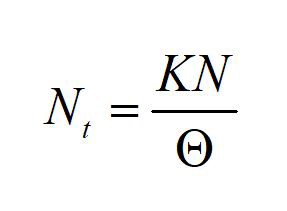
- Melodic law (law of transitions): Sound objects can be divided into two phases: sustained and transient. Transient sounds include attack and consonants, i.e. short, usually explosive events. The sustained sounds form the main part of the sound object. For a melody, the average number Nt of elements present in the transient sections is proportional to the number of final elements and inversely proportional to the total duration Θ of the transient section: