
After the failure of models that sought to short-circuit the macrocosm and microcosm with the help of harmony, cosmological comparisons fell into disrepute. The linguistic metaphor of music began its triumphant advance, and rightly so, since it offers a far greater potential for explanation.
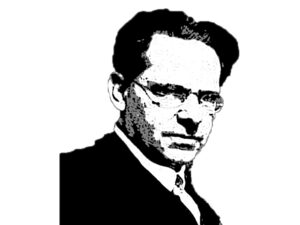
At the beginning of the 20th century, however, somewhat apart from the major trends, a new theory of music developed as a model of a separate cosmos with its own physical laws. It was no longer based on naive analogical thinking. Its foundations were, on the one hand, a metaphysics inspired by Hegel and, on the other, the laws of Gestalt theory. The resulting energy/space model of music is primarily the creation of Ernst Kurth (1886–1946), a highly respected but also controversial scientist of his time, who voluntarily completed his life’s work far away from the major scientific centers – at the Institute of Musicology at the University of Bern in Switzerland.
Kurth created four major works that together form a self-contained oeuvre: a treatise on counterpoint (Grundlagen des linearen Kontrapunkts, 1917), a treatise on harmony (Romantische Harmonik und ihre Krise in Wagners Tristan, 1920), a treatise on form (Bruckner, 1925) and a treatise on music psychology (Musikpsychologie, 1931), which summarizes the results of his thinking.
A glance at the table of contents of «Musikpsychologie» speaks volumes: the second section discusses «force, space, and matter.» Among other things, it discusses the «movement image» and the relationship between psychic and physical energy. The musical phenomenon of space is explained and the «illusion of matter» is discussed. For Kurth, music is no longer a mirror of the macrocosm, but it still has the nature of a cosmos:
The sensory stimulus is elevated to the level of musical psychology in three new basic psychological states and developed into music: energy, space, and matter appear here as the fundamental phenomena which, as has been shown, already prevail in certain embryonic forms in the mere perception of sound, albeit only in traces and not yet in the same way. Through them, music is transformed from an auditory process into a world of hearing.
Kurth distinguishes between several stages of acoustic perception. The most external is the physical, which is described in terms of wave and vibration theory. Physiology serves as the gateway to the spiritual. It describes the processes within the hearing organ «in which air vibrations are absorbed and transmitted to the brain center through the finest nerve impulses.»
Physiology begins «with the absorption of sound vibrations by the stimulus-sensitive outer ends of the auditory nerves.» Up to this point, one can speak of a passive process. The auditory impression dealt with by physiology is a «tabula rasa.»
What is interesting is that all these processes and the associated phenomena of transformation in the cochlea or the ‘Corti membrane’ of the ear are not accessible to musical hearing. The impression of sound also remains «far removed from the realization that the loudness of a sound increases quadratically with the amplitude of the vibration.» Deviations from physics occur, for example, in «phenomena such as the fact that the sum of the sound sources does not add up to the sound intensity, and in many other aspects of hearing on which everyday practice is based.»
Ultimately, however, music itself is largely a creation of the mind. A «creative force shapes the sound material into that apparent impression of something supple and elastic. This,» says Kurth, «is the crux of all these phenomena: they do not actually lie in the sound stimuli, but are transferred into them by the processing forces; they are what transform sound into ‘material.»
Sound, Kurth concludes, is no longer merely the image of sensory impressions coming from outside, but is what is projected into this material. From what the physiological processes in the ear feed to the brain, the brain creates a virtual universe with apparent properties such as gravity, materiality, spatiality, sensations of weight, movement, and forces. When a string vibrates, producing and propagating overtones, sound is created; but the fact that tension and gravity prevail over this sound is our doing; it is not the phenomenon of sound that is reflected here, but our psyche. The doctrine of sound sensations sees only the life energy that we receive from sound; but there is also a life energy that we breathe into sound. These phenomena therefore do not exist in the real outside world. They only become a reality that we experience psychologically.
However, the «virtual» physics of musical space is fragile, because only what is in our momentary consciousness exists. This can only sketch certain characteristics in a fragmentary way. This also results in a certain uncertainty in perception:
We can feel force directly and recognize its forms in sounding symbols; it thus manifests itself emotionally and sensually. We can perceive matter through sensory impressions, but these are based on a psychologically conditioned transformation of sound stimuli. Space, however, eludes both clear perception and clear awareness; the concept of space even dissolves when one attempts to elevate it to the realm of clarity, of a geometrically visual space. Space and matter are phenomena of an intermediate layer between subconscious processes and the actual world of sound. Nevertheless, perceptions of space and matter in music are psychological phenomena, basic functions of hearing, and not random figments of the imagination.
One of the central concepts of Kurth’s theory is that of force, which is understood as a directed striving of sounds toward other sounds. In his analysis of the phenomenon, Kurth agrees to a certain extent with Lerdahl and Jackendoff, or GTTM. This is because one of the explanations for the phenomenon of force seems to lie in Gestalt theory, to which Chomsky’s musical followers also refer. Although it cannot be proven that Ernst Kurth had any contact with Gestalt theorists or was familiar with their work, musicologist Luitgard Schader concludes in a study on Kurth’s «Linear Counterpoint» that the terminology and interpretation show striking similarities. However, in a study on Kurth’s «Linear Counterpoint,» musicologist Luitgard Schader concludes that the terminology and interpretation show such striking similarities that Kurth must have been familiar with the early works of Erich von Hornbostel and Max Wertheimer.
Kurth goes one step further and postulates a kind of gravitational force between the individual tones, which can be seen as a counterpart to the hierarchical forces in the transformation grammar – prolongation reduction – of Lerdahl/Jackendoff.
Kurth’s work defies adequate appreciation in its own era. It is not the time of «cosmological» designs, but rather the time when language metaphors are at their peak – especially with the work of Hugo Riemann. At that time, there was hardly any way around Riemann, who is considered the ultimate authority on music theory. In a sense, his theoretical foundation forms a counterpoint to Kurth’s. Riemann carefully and intelligently reviews Kurth’s thinking. His discussion of «linear counterpoint» is groundbreaking for the future reception of Kurth’s ideas. Unfortunately, Riemann died in 1919, and so the dialogue between the two ended very early on.
In his review entitled «Phrasing in the Light of the Theory of Tone Concepts», Riemann attests that Kurth’s work is «new, striking, and sensational.» However, as Luitgard Schader suggests, he attempts to integrate it into his own theory of phrasing, and when he fails to do so, he accuses Kurth of «an almost oppositional attitude toward its tendencies.»
However, Kurth himself is not entirely blameless for the mixed reception of his work. The criticism raised by many other reviewers that his concept is unusable for practical teaching hits a sore point, as Kurth’s works are only occasionally and very loosely connected to practical analysis. In addition, he tends toward a sprawling, sometimes somewhat verbose style that never really gets to the heart of the matter. As a result, Kurth later fell into obscurity. However, his works are still worth studying.
Today, the music aesthetician Victor Zuckerkandl, who died in 1965, is almost completely forgotten. He took up Kurth’s ideas but differed from him fundamentally in his basic principles. He developed a «three-world theory» that is closer to a metaphysically tinged Platonism than to Kurth’s modern constructivism.
Zuckerkandl distinguishes between three worlds: In addition to the physical and the psychological, which are also found in Kurth, he postulated a third component, which he called the dynamic. The musical symbols, which have their own reality, are constructed from these components:
The believer encounters God in the symbol as coming from «outside»; but he recognizes in him the same being who is familiar to him from inner religious experiences. The seeker of God strives to find «outside» what he has already seen within himself. Many enlightened individuals have been guided onto the right inner path by an external appearance. We are clearly in a realm where conventional boundaries become blurred and the concepts of inside and outside become questionable.
After banishing all spatiality from music and even declaring it to be the «spaceless art par excellence,» Zuckerkandl sets out to explore the paradox of a spatiality without space, as found in music. The initial problem is not so much the third dimension of space, which he sees as movement in time, but rather the apparent spatiality that must be invoked when several sounds that resonate together can be distinguished from one another. In this case, they must be located «in different places.» «Only space allows us to experience that there is a side-by-side existence,» Zuckerkandl states.
The problem can therefore be presented as follows: On the one hand, music appears as the art that, in Schopenhauer’s words, «is perceived solely in and through time, with the complete exclusion of space»; on the other hand, it is permeated by processes that seem to presuppose a spatial order and which, in any case, become completely incomprehensible with the «complete exclusion of space.»
A solution to this dilemma can only be found if the spatiality of music is not identified with the spatiality of physical space. The «space» in which music takes place has a different structure from physical space, but many of its fundamental properties. The most fundamental of these is the experience of expansion, which can be experienced in music in the most subtle ways, whether in the volume that one believes one hears in an individual tone, in the distances between high and low tones, or in the density and transparency of a sound texture. However – and this is probably the most astonishing thing about the listening space – although the sound is in a «space,» it is also everywhere. Zuckerkandl concludes that this is a «placeless space,» which at first glance seems to be a contradiction in physical terms. However, this contradiction is resolved when one accepts that musical space is something completely different from physical space. Distances cannot be measured in musical space, which means that it has no meter.
The dimensionality of musical space also differs from that of physical space. Zuckerkandl cites the striking example of aural agoraphobia, a condition in which the patient loses the ability to locate sound sources in space. The patient perceives musical space in exactly the same way, at least according to Zuckerkandl, who does not provide any further evidence for this claim. This means that the patient’s organization of musical space remains unaffected by that of physical space.
The depth of space does not derive from the depth of physical space and the position of the sound source within it. In order to grasp the dazzling dimensionality of musical space, Zuckerkandl resorts to somewhat obscure formulations, which nevertheless reflect the indeterminacy of the experience:
In this sensation of being «directed from … to …,» the listener perceives the depth of space. The depth of the listening space therefore does not refer to the distance between my ear and the point in space where a sound is produced, nor does it refer at all to the space in which I encounter sounds, but rather to the space that I encounter in the sounds, to the «from…here» element of this encounter. The depth of the listening space is just another word for this coming from… that we perceive in every sound. It is as if a swimmer in a stream felt the entire depth of the water’s extension through the pressure of the water against his skin, through which the water is moving toward him from its source. A sensation allows us to experience the listening space as deep and flowing.
In the modern mathematical sense, Zuckerkandl attributes to music a directed, i.e., vectorial nature, which he identifies with the dimension of depth. He places this in the vicinity of the «flowing space» postulated by the philosopher Michael Palágyis at the turn of the 19th to the 20th century.
However, Zuckerkandl limits musical space to this one dimension and denies it both height and width or corresponding analogies to physical dimensions. More precisely, he claims that every tone, whether high, low, full, or thin, occupies the entire space. In doing so, he also entangles himself in contradictions, for example when he says that «the listener’s experience of space is an experience of space flowing in from all sides.» «All sides» would imply more than one dimension.
What is interesting about Zuckerkandl’s work is that, in the tradition of Geza Révész and Jakob von Uexküll, he departs from comparing musical space with the usual geometric space. On the one hand, he states that musical space completely lacks one of the capabilities of geometric space: the measurability of distances. Zuckerkandl attempts to understand musical space as a kind of energy field in which vector-directed forces overlap and yet can be kept apart. To this end, he uses a metaphorical being:
Let us imagine a living being that possesses none of our senses, but is endowed with a sensitivity to magnetic fields that is evenly distributed throughout its body and cannot be localized—comparable, perhaps, to the dull sensations of the sense of orientation—a piece of iron endowed with consciousness. This magnetic sense is a remote sense, which means that its sensations include an awareness not only of its own body, but also of something external approaching from a distance. Such a being would therefore have an ‘external’ experience, an experience of space – and this space would never be completely darkened or empty; as a result of the Earth’s magnetism, there would always be ‘something’ there, or rather, the space itself would always be something, a distinct tension. What conception would such a being have of a magnet suddenly appearing in its vicinity? It does not see it, it does not grasp it, it can only – to use a good word from Köhler’s book just quoted – ‘know it dynamically’. The horseshoe-shaped or otherwise shaped piece of matter does not exist for it at all; nothing exists except the sudden change in the dynamic state of the ‘outside’. For this being, therefore, a ‘magnet’ is not a body in a place, not an object in space, but a state of space. If we surround our animated piece of iron with a ring of magnets—and assume that the magnetic sense has the same ability as the ear to distinguish the individual components from a combination of simultaneous influences—it will not experience these magnets as bodies in different places, but as dynamic states superimposed or intertwined, all in the same place, «outside,» everywhere. If we allow the magnets to rotate around the piece of iron in a circle, the result will not be called ‘change of location of bodies’, but ‘change of direction and tension of dynamic states’.